

There is a number that should stop every business owner in their tracks: 70. According to Gallup, 70% of the variance in employee engagement comes down to the manager or leader. Not pay. Not perks. Not the office. The person at the top of the team.
That means if your team is disengaged, unmotivated, or quietly quitting, leadership is almost certainly a significant part of the story, even if it does not feel that way from where you sit.
The good news is that leadership is a skill, and skills can be developed. In this guide, we break down exactly how leadership affects employee engagement, which leadership styles work best for which teams, and the practical steps leaders can take right now to build a culture where people actually want to show up.
In this article:
"Managers account for 70% of the variance in employee engagement scores across business units." Gallup State of the Global Workplace, 2024
Most organizations treat employee engagement as an HR problem, something to be fixed with a survey, a wellness program, or a team-building day. But the data tells a different story. Engagement is primarily a leadership problem, and it requires a leadership solution.
When employees feel unsupported, unclear on expectations, or undervalued, they disengage. And in the vast majority of cases, those feelings trace back to their direct manager or the leadership culture above them. Conversely, when leaders invest in their people by communicating clearly, recognizing effort, and adapting to individual needs, engagement follows.
The implication for business owners is significant: you do not need to overhaul your benefits package or redesign your office to improve engagement. You need to develop better leaders, starting with yourself.
Not every leader is the same, and not every leadership style produces the same engagement outcomes. Understanding which style you and your managers default to and which situations call for which approach is one of the most valuable investments you can make in your leadership development.
Transformational leaders inspire through vision. They connect individual work to a larger purpose, model the values they expect, and challenge their teams to grow. Research consistently links transformational leadership to higher engagement, lower turnover, and stronger organizational commitment. This style works particularly well with high-autonomy employees and purpose-driven teams.
Servant leaders prioritize the needs of their team over their own. They remove obstacles, provide resources, and create the conditions for people to do their best work. This style tends to generate deep loyalty and psychological safety, the feeling that it is safe to speak up, take risks, and admit mistakes. For teams navigating change or high-pressure environments, servant leadership can be transformative.
Coaching leaders develop capability in their people through questioning, feedback, and targeted growth opportunities rather than directing or micromanaging. This style is highly effective for engaged employees who are motivated by personal development, but can feel frustrating to those who prefer clear direction. The key is knowing which members of your team want coaching and which need clarity.
Directive leadership, clear instructions, defined expectations, and close oversight are often mischaracterized as disengaging. In reality, it depends entirely on context. For new team members, during crises, or in high-compliance environments, directive leadership reduces anxiety and builds confidence. The problem arises when it is applied uniformly to everyone, regardless of their experience or working style.
The most effective leaders are not wedded to a single style. They read the individual and the situation, and flex accordingly. This is called adaptive leadership, and it is the single most impactful skill a leader can develop for driving engagement.
Here is the challenge every leader faces: your team is made up of different people with different personalities, communication preferences, and working styles. What motivates one person leaves another cold. What one person calls clear direction, another experiences as micromanagement.
This is where personality frameworks like DISC become genuinely useful, not as a box to put people in, but as a shared language for understanding how different people are wired.
DISC profiles map behavior across four types: Dominance (D), Influence (I), Steadiness (S), and Conscientiousness (C). Each type has distinct preferences for how they like to be communicated with, recognized, and led:
When leaders understand their team's DISC profiles, they can stop guessing and start communicating in ways that actually land. The result is less friction, fewer misunderstandings, and significantly higher engagement.
At Quokka Hub, we use DISC as one of the tools that helps us understand how your team communicates and what kind of support each person needs. It's not a report you get and file away. It's a tool we use to make our work with your team more targeted and effective.
Curious whether your team has an engagement problem worth solving? Start with the free 2-minute Engagement Health Check; it takes less time than a coffee break.
Today's workforce spans multiple generations, from Boomers and Gen X to Millennials and Gen Z, each with different expectations of leadership. Navigating these differences requires emotional intelligence: the ability to understand and manage your own emotions as well as those of your team members.
EQ training equips leaders to connect with individuals on a human level, adapt their communication style, and create an environment where people feel psychologically safe. Research from TalentSmart shows that EQ accounts for 58% of performance across all job types, making it one of the highest-ROI leadership investments available.
Disengagement thrives in information vacuums. When employees do not know where the business is heading, how decisions are being made, or where they stand, anxiety fills the gap. Transparent communication, like regular team updates, honest conversations about challenges, and clear articulation of company values, removes that anxiety and replaces it with trust.
This does not mean sharing everything. It means leaders should default to openness rather than opacity, and communicate proactively rather than reactively.
Most recognition programs celebrate outcomes: hitting targets, completing projects, winning clients. But the behavior that drives those outcomes, like the resilience, the late nights, the creative thinking, the willingness to raise a difficult issue, often goes unacknowledged.
Leaders who recognize the effort and the approach, not just the result, build cultures where people feel genuinely valued. Employees who receive high-quality recognition are 45% less likely to have left their organization after two years, and 65% less likely to be actively looking for a new job. (Gallup, 2024)
A Deloitte survey found that 94% of US professionals say they would benefit from work flexibility. More importantly, most agree that it is leadership that determines whether flexibility is genuinely available in practice, not HR policy.
Leaders who model healthy boundaries, trust their teams to deliver results rather than hours, and actively support flexible working arrangements create environments that attract and retain top talent. Flexibility is no longer a perk but rather a sign of how much a leader trusts their people.
Business is changing faster than at any point in history. Leaders who equip their teams to adapt rather than resist change are investing in long-term engagement. Agile methodologies, originally developed for software teams, offer a practical framework for any organization: short sprints, regular retrospectives, and continuous improvement cycles. The result is a team that feels capable and in control, rather than overwhelmed and reactive.
Every engagement strategy eventually hits the same wall: leaders implement initiatives, but never check whether they are working. Surveys go out, results come in, and then nothing changes. Employees notice. And they disengage faster than before because the broken promise is worse than no promise at all.
Closing the engagement loop means treating employee feedback as an ongoing conversation, not a one-time data collection exercise. It means:
When leaders demonstrate that feedback leads to action, trust compounds. And when trust compounds, engagement follows. This accountability loop is not complicated, but it requires consistency and the willingness to hear things you might not want to hear.
Companies in the top quartile for employee engagement are 23% more profitable and experience 43% less turnover than those in the bottom quartile.
Source: Gallup. State of the Global Workplace Report.
Company values are only as real as the behavior of the people at the top. Leaders who espouse one set of values and demonstrate another who talk about psychological safety but punish mistakes, or champion work-life balance while sending emails at 11 pm, create cynicism that is very hard to walk back.
The most powerful thing a leader can do for engagement is to make the company values visible in their own behavior, every day. If innovation is a value, model curiosity. If accountability is a value, own your mistakes publicly. If well-being is a value, leave the office on time and mean it.
This is the kind of leadership that people talk about years later. It is also the kind of leadership that makes people stay.
Leadership is not one factor among many in employee engagement; it is the primary factor. The research is unambiguous, and most experienced leaders know it intuitively. What is less clear is what to do about it.
The path forward is not complicated: invest in understanding your people as individuals, develop the emotional intelligence to flex your leadership style, communicate with transparency, recognize effort as well as outcomes, and close the feedback loop every time. These are not grand gestures. They are consistent, small behaviors practiced over time, and they compound into cultures where people genuinely want to work.
If you are not sure where your team stands today, take advantage of a free pulse check that blends AI and human insights.
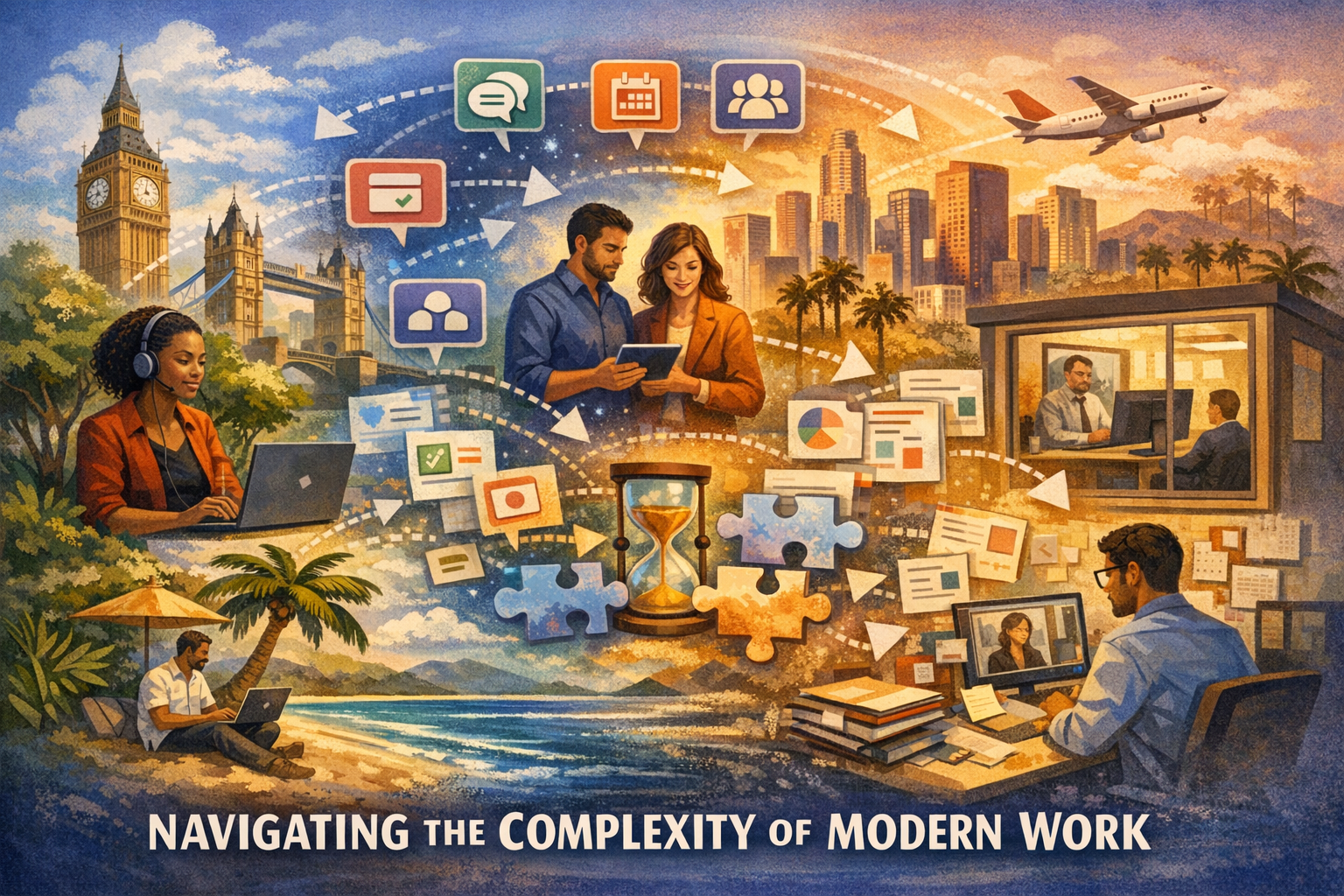
Fragmented tools are quietly killing distributed team productivity. Organizational design strategist Michael Franco, founder of Quokka Hub, shares how centralized platforms deliver measurable improvements in work-life balance, communication, and team connection without micromanagement or forced engagement.
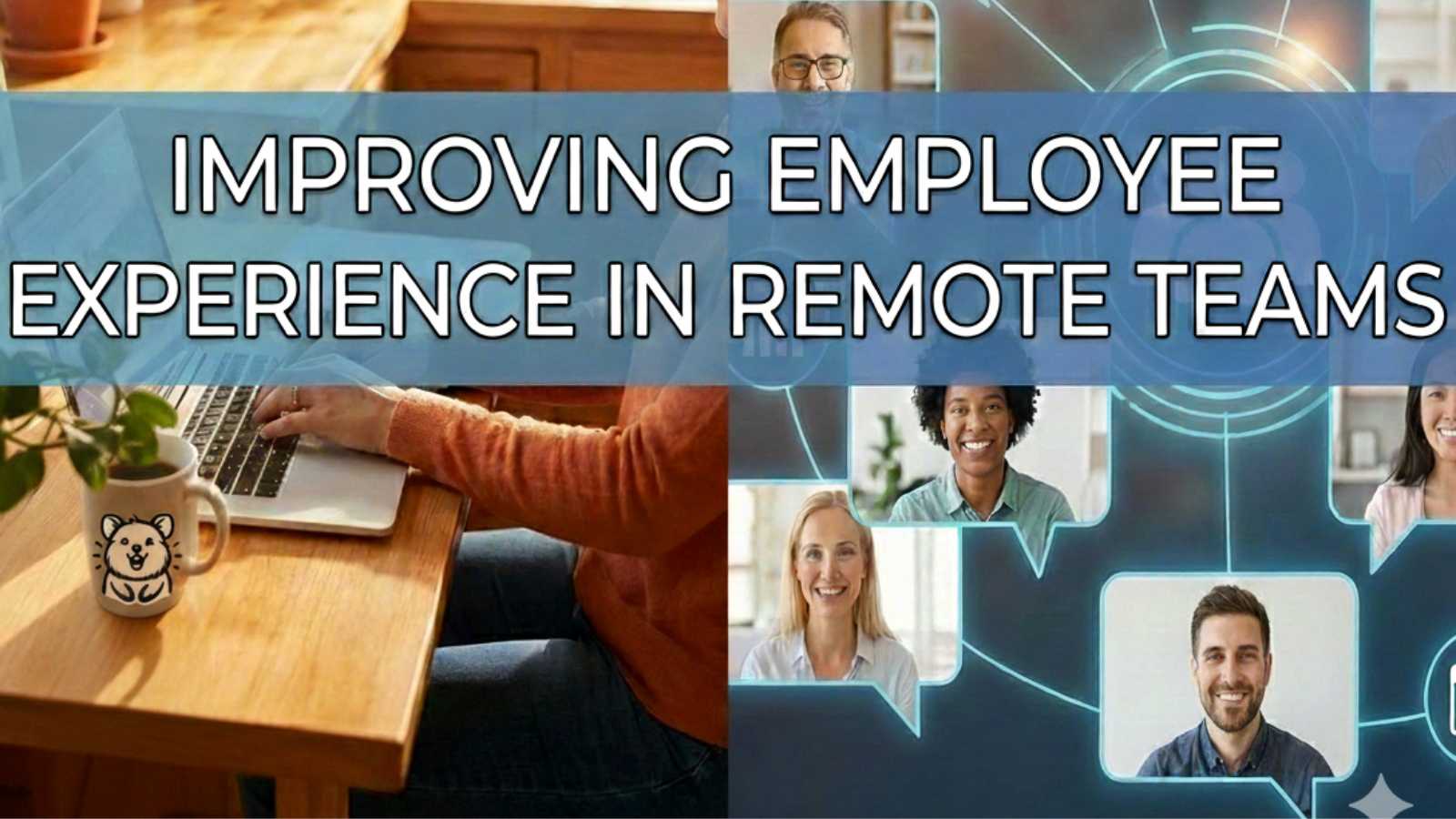
A snapshot of how remote and hybrid work are redefining employee experience and the strategies leaders can use to keep teams connected, motivated, and thriving from anywhere.

Leadership is the single biggest driver of employee engagement — yet most businesses treat it as an HR problem. This guide breaks down which leadership styles actually work, how to adapt your approach to individual personalities, and the five practices that consistently move the needle on team motivation.