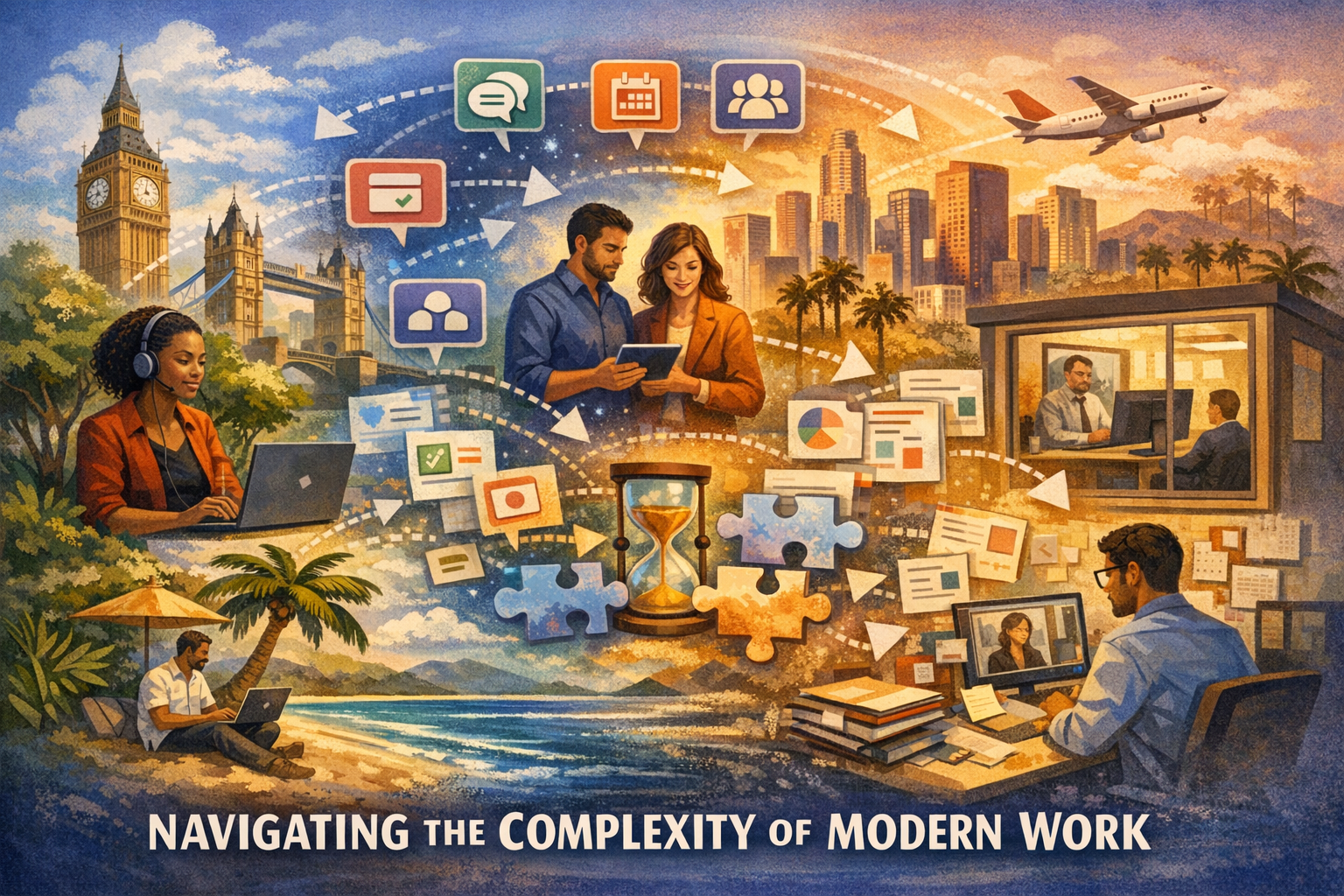
The modern workplace is no longer a destination but rather a global tapestry of activity. As Michael Franco, organizational design strategist and founder of Quokka Hub, discussed on The Culture Profit Podcast, today's teams are inherently "messy." A single team might include colleagues breathing the air of England, West Africa, Mexico, Florida, and California simultaneously.
Gallup research confirms that hybrid and remote work are now permanent fixtures of the professional landscape, not temporary experiments. And recent data on remote work trends shows that the biggest challenge isn't geography, it's the fragmentation that comes from scattered tools, siloed information, and disconnected teams.
When a team's workflow is spread across a CRM, a chat app, a project management tool, and a dozen email threads, the result is what Franco calls a "fractured experience." This fragmentation creates three compounding problems:
The first is a time tax; vital hours disappear hunting for documents buried in different systems.
The second is engagement erosion, where team members feel disconnected from the pulse of the company. The third is the visibility trap, a false belief that seeing someone online from 9 to 5 equals productivity rather than focusing on meaningful results.
True organizational clarity lives at the intersection of three pillars: clarity, alignment, and communication. A centralized platform creates a single source of truth, ensuring that information equity exists for everyone regardless of time zone or location.
For distributed teams, centralization delivers three measurable advantages. It eliminates the mental load of constant context-switching. It places conversations directly inside the tasks they reference, so every interaction carries full context. And it empowers leaders to move away from monitoring presence and toward honoring performance.
Quokka Hub's client solutions are built around this philosophy and the results are quantifiable.
When teams unify their tools into a centralized environment, the transformation is measurable. Based on outcomes tracked across implementations like the Empowered English case study, three areas show consistent improvement:
Work-life balance improves by 29.8% through asynchronous access that removes the pressure of immediacy and reduces always-on burnout. Leadership communication improves by 18.1% when leaders share vision in a central hub, making transparency the default rather than the exception. Team connection improves by 12.6% even across oceans, because a centralized space creates what Franco calls a "digital campfire" where everyone feels seen and included.
Quokka Hub takes its name and philosophy from the quokka, a small, communal creature widely known as the happiest animal in the world. The Quokka Philosophy holds that work should be communal, low-pressure, and effortless, and that the best culture-building happens within clear boundaries, not despite them.
Franco refers to the centralized hub as "the box." Rather than thinking outside it, the most sustainable and executable happiness is found within it. Clear digital boundaries create the freedom to connect without exhaustion.
Practical connection activities that work in asynchronous environments include emoji movie guessing games posted in shared channels, a "workplace cribs" style photo share of home office setups, and pet or baby photo guessing games that build genuine human bonds outside of work context. These work precisely because they are non-mandatory; team members engage when they are ready, preserving focus for deep work.
Productivity is not about looking busy. It is about achieving results with the right tools, the right alignment, and the freedom to work as a full human being. As Franco puts it, the goal is to find the "Quokka" in every environment — the communal spirit that emerges when digital chaos is replaced by a centralized hub.
To get started, audit your current tools for fragmentation, establish one single source of truth for your team's goals, and test whether a teammate could complete a task without interrupting anyone else's focus time. Then explore how Quokka Hub can help your team build that clarity from the ground up.
Fragmented tools are quietly killing distributed team productivity. Organizational design strategist Michael Franco, founder of Quokka Hub, shares how centralized platforms deliver measurable improvements in work-life balance, communication, and team connection without micromanagement or forced engagement.
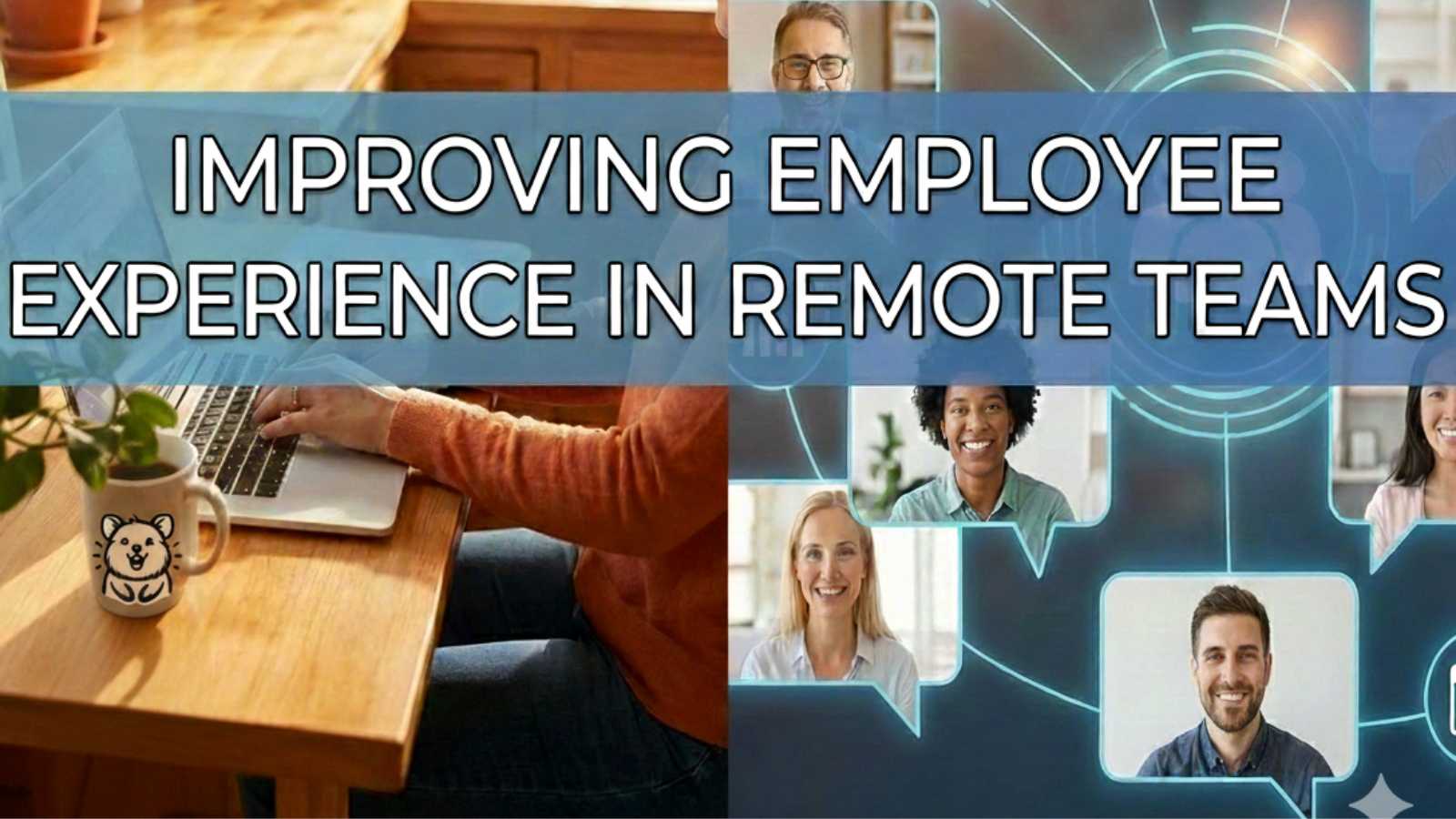
A snapshot of how remote and hybrid work are redefining employee experience and the strategies leaders can use to keep teams connected, motivated, and thriving from anywhere.

Leadership is the single biggest driver of employee engagement — yet most businesses treat it as an HR problem. This guide breaks down which leadership styles actually work, how to adapt your approach to individual personalities, and the five practices that consistently move the needle on team motivation.